
Why Are Solar Panels Good?
Author: Steve Fairless
Originally Published: 25th June 2024 · Updated: 28th August 2026
Solar panels are good because they allow a property to generate electricity at the point where it is used, reducing the amount bought from the grid, cutting exposure to electricity-price changes and producing power without combustion at the point of generation. When they are correctly designed, they can also work with battery storage, electric vehicles, smart tariffs and export payments to improve the value of each unit generated.
At Sustainable Energy Engineering, we do not describe solar as automatically “good” for every roof. The benefits depend on the property, available roof area, orientation, shading, annual energy use, time-of-day consumption, system size, tariff and installation quality. A well-designed system can be extremely effective; a badly matched one can leave useful roof space, generation or money on the table.
This August 2026 update uses current UK electricity prices, solar deployment, Smart Export Guarantee information and VAT rules to show where the benefits come from and where the limitations need to be understood.
Updated: 28th August 2026. Financial examples use current national-average price-cap information for illustration only and are not quotations or savings guarantees.
Why Are Solar Panels Good? The Short Answer
- They reduce imported electricity. Every useful kWh generated and consumed on site is a kWh the property does not need to buy from the grid at that moment.
- They turn an unused roof into an energy asset. A suitable roof can produce electricity for decades with no fuel deliveries.
- They can earn export income. Eligible systems can receive payment for measured electricity exported under the Smart Export Guarantee or other export arrangements.
- They have no fuel combustion during operation. That reduces the operational carbon impact of electricity generated on site.
- They integrate with batteries and flexible tariffs. Storage can shift solar electricity from the middle of the day into evenings or higher-value periods.
- They can reduce exposure to future electricity prices. A portion of household consumption is supplied by a long-lived asset rather than purchased unit by unit.
Solar Is Already a Mainstream Part of the UK Electricity System
Solar adoption is growing because the technology has moved well beyond the early-adopter stage. Department for Energy Security and Net Zero data published on 27 August 2026 reported nearly 172,000 solar installations across the UK from the start of the year to the end of July. July alone saw nearly 28,000 installations, including more than 19,800 rooftops.
The underlying generating fleet is now material to national electricity supply. Official Energy Trends data recorded 21.7 GW of UK solar PV capacity at the end of 2025, up 15% in a year. Solar generation reached a record 20.0 TWh during 2025, a 37% increase on 2024.
1. Solar Reduces the Electricity You Need to Buy
The most direct financial benefit is self-consumption. When the panels are generating and the building has electrical demand, solar output supplies that demand first. Grid import falls by the same amount, subject to inverter and system losses.
At the time of this update, Ofgem's national-average electricity unit rate for a Direct Debit customer on a capped default tariff is 26.11 pence per kWh for 1 July to 30 September 2026. Ofgem has also announced an average rate of 26.32 pence per kWh for 1 October to 31 December 2026.
| Solar electricity self-consumed | Avoided import value | What this example excludes |
|---|---|---|
| 1,000 kWh/year | About £261 | Standing charges, export income, tariff variation, system losses, finance costs and changes in future electricity prices. |
| 2,000 kWh/year | About £522 | |
| 3,000 kWh/year | About £783 | |
| 4,000 kWh/year | About £1,044 |
Those examples are deliberately simple. The actual value of solar depends on when the electricity is produced and when the home needs it. This is why we size our domestic solar PV systems around energy use and roof potential rather than simply fitting the largest number of modules possible.
2. Solar Can Earn Money for Electricity You Do Not Use
Solar generation that is not consumed or stored can be exported. The Smart Export Guarantee requires participating suppliers to pay eligible small-scale generators for measured low-carbon electricity sent to the grid, subject to scheme rules. For solar PV, eligible installations can be up to 5 MW.
Under Ofgem's current SEG rules, electricity suppliers with at least 150,000 domestic electricity customers at 31 December are Mandatory SEG Licensees for the following SEG year. Suppliers below that threshold can opt in voluntarily. Ofgem publishes the current supplier list, while individual licensees set their own tariff rates, contract lengths and qualifying terms.
SEG Activity Is Now Financially Significant
Ofgem's latest published SEG annual report recorded 443.1 GWh of low-carbon electricity exports and £56.97 million paid to registered installations in SEG Year 5, compared with 283.1 GWh and £30.75 million in Year 4. That is an increase of about 56.5% in reported exported electricity and about 85.3% in payments year on year.
The rate paid is not fixed nationally. Suppliers set their own SEG tariff rates and terms, so export value can differ materially between tariffs.
3. Solar Produces Electricity Without Burning Fuel on Your Roof
A PV module has no combustion stage and no fuel delivery. Once installed, it converts incoming light into electricity electronically. There are still lifecycle impacts from mining, manufacturing, transport, installation and eventual recycling, so it would be inaccurate to call solar “impact free”.
The key environmental advantage is that operational generation replaces some electricity that would otherwise need to be produced elsewhere in the system. The carbon benefit varies with manufacturing route, module lifetime, local solar yield and the carbon intensity of the electricity displaced.
Solar Is Low-Carbon, Not Zero-Impact
Good sustainability claims should include the full lifecycle. Panels contain glass, aluminium, silicon, copper, polymers and other materials that require energy to produce. We therefore avoid claims such as “zero-carbon solar panel”. The more accurate statement is that solar PV is a low-carbon electricity technology with no direct fuel combustion during operation.
4. Solar Converts Roof Area into Long-Term Productive Space
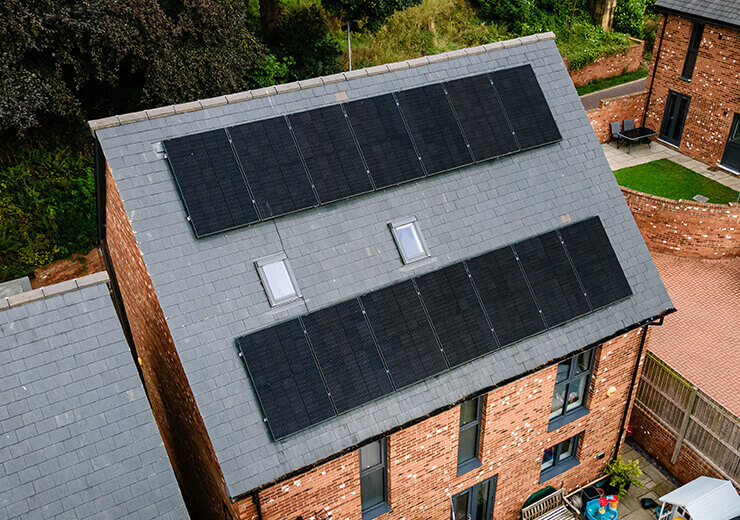
Most roofs already exist to keep weather out of the building. A solar array allows part of that surface to generate electricity as well. This is especially valuable where land is constrained: homes, warehouses, schools and commercial premises can generate without dedicating separate ground solely to energy production.
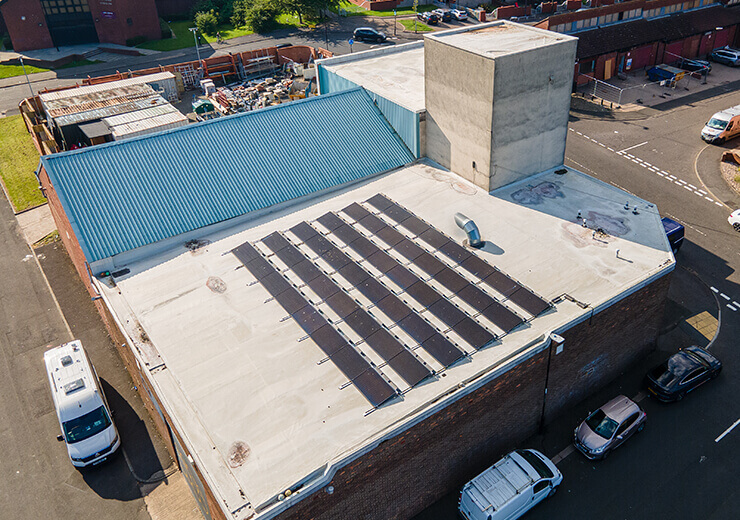
For businesses, this can be particularly powerful because daytime electrical demand often coincides well with solar production. That is one reason commercial rooftops can have strong self-consumption rates even without very large batteries.
5. Batteries Can Make More of the Solar Useful
Solar is strongest around the middle of the day, while many households use more electricity in the morning and evening. A battery can shift surplus generation into those later periods. It can also be used with time-of-use tariffs to charge or discharge at selected times, subject to the battery's efficiency, power limits and tariff rules.
A well-sized solar PV and battery system can therefore increase self-consumption, but a battery is not automatically profitable simply because solar is present. Capacity, charge/discharge power, round-trip efficiency, reserve settings and annual throughput all matter.
6. Solar Can Reduce Exposure to Electricity-Price Volatility
A homeowner cannot control wholesale gas markets, network charges or future retail tariff design. Solar does not eliminate those costs because grid connection is still valuable and most homes continue to import electricity. What it can do is reduce the number of imported kWh exposed to future unit prices.
Ofgem's August 2026 announcement illustrates why this matters: the typical dual-fuel price cap is scheduled to rise by 4% from 1 October 2026, while the average capped electricity unit rate moves from 26.11p to 26.32p/kWh. Solar does not make a household immune from price changes, but it changes the proportion of consumption that has to be bought.
7. The Current VAT Position Reduces Upfront Cost for Residential Installations
HMRC guidance confirms that qualifying installations of solar panels in residential accommodation are temporarily zero-rated for VAT until 31 March 2027. From 1 April 2027 the reduced rate is scheduled to apply. Electrical battery storage is also within the temporary zero-rate rules in qualifying circumstances.
Tax treatment should always be checked at the time of purchase because rules can change, but the current relief directly affects the installed cost of qualifying systems.
8. Solar Has Few Moving Parts
PV modules generate electricity without motors, turbines or combustion machinery. That reduces routine mechanical maintenance compared with many other generation technologies. It does not mean “maintenance free”. Roof fixings, cables, isolators, connectors, inverter operation, monitoring and physical module condition should still be considered through the system's life.
A monitoring platform is particularly valuable because falling generation is not always visible from ground level. A string fault, inverter issue or persistent shading can exist long before a homeowner notices it on a bill.
9. Solar Can Work With EVs, Heat Pumps and Electrification
As households move more energy use from fossil fuels to electricity, annual demand can rise. An EV, heat pump, electric hot-water system or home battery changes the ideal PV design. Instead of sizing only for today's electricity bill, we can model future loads and decide whether extra roof capacity is valuable now.
Solar will not necessarily charge an EV entirely from sunshine every day, especially in winter. But daytime smart charging can absorb surplus generation that might otherwise be exported at a lower value.
10. Solar Can Be Sized to the Property Rather Than Sold as a Standard Package
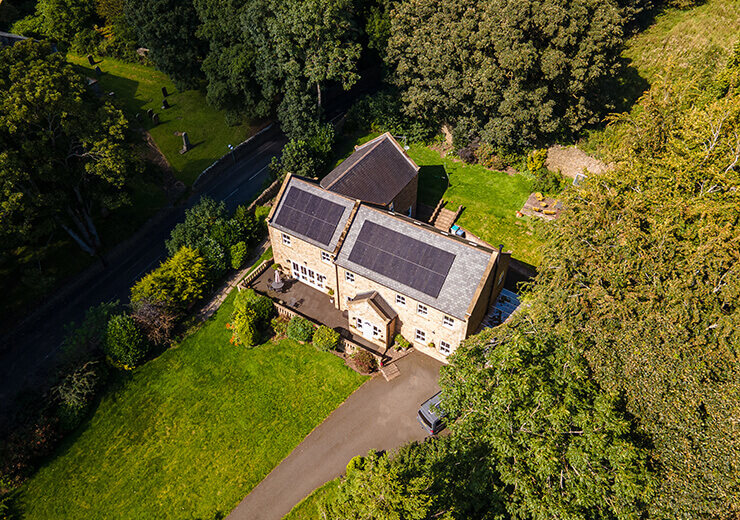
A major advantage of PV is modularity. The array can be designed around usable roof faces, obstructions, electrical limits and expected consumption. A small suitable roof might use high-efficiency modules to maximise watts per square metre. A large commercial roof may prioritise total yield, layout efficiency and maintenance access.
What We Check Before Calling Solar a Good Investment
- Annual electricity consumption and, where available, half-hourly usage.
- Roof orientation, pitch, dimensions and structural condition.
- Shading from trees, chimneys, dormers and neighbouring buildings.
- Expected generation using recognised design methodology.
- Inverter size, MPPT layout and export/grid constraints.
- How much solar is likely to be consumed directly.
- Whether battery storage changes the value of midday surplus.
- Current import tariff and realistic export arrangement.
- Future EV, heat-pump or extension plans.
- Equipment warranties, installer support and serviceability.
Where Solar Does Not Solve Everything
Solar has clear strengths, but good advice also means explaining the limits:
- It is intermittent. Output follows daylight and weather, so the grid or storage still matters.
- Winter production is lower. A system sized for good annual performance cannot make December behave like June.
- Roof suitability matters. Heavy shading, weak roof condition or unsuitable geometry can reduce the case for installation.
- A normal grid-tied array does not automatically run during a power cut. Backup needs compatible equipment and deliberate electrical design.
- Financial returns are site specific. No responsible installer should guarantee a generic payback period without using the property's actual assumptions.
What Makes Solar Good in Practice, Not Just on Paper?
The biggest difference comes from design. A panel can have excellent specifications yet produce a disappointing result if it is shaded, poorly positioned or connected to a mismatched inverter. A slightly lower-output module can outperform it over the year if the layout, voltage design and consumption match are better.
This is why our view is simple: solar is good when the whole system is good. The panel, inverter, roof, mounting, protection, monitoring, battery strategy and tariff should work together.
Thinking About Solar for Your Home?
We can model the system around your roof and actual electricity use rather than relying on a generic package size. That gives you a clearer view of expected generation, self-consumption and where storage may or may not add value.
Request a tailored solar quote and include your annual electricity usage so we can start with the numbers that matter.