
UK Solar Market 2025–2026: What Changed and What It Means
Author: Steve Fairless
Originally Published: 10th October 2024 · Updated: 2nd September 2026
The UK solar market has moved beyond the “what might happen in 2025?” stage. By late August 2026, government data showed nearly 172,000 solar installations had been fitted across the UK since the start of the year, with rooftop systems accounting for more than seven in ten installations during July. The national policy direction is also clearer: the Clean Power 2030 framework and Solar Roadmap point toward a 45–47 GW solar ambition by 2030.
We originally published this page in October 2024. At Sustainable Energy Engineering, we have now rebuilt it around the evidence available in September 2026 rather than preserving predictions that have already been overtaken by the market.
UK Solar Market 2026: The Key Points
- Nearly 172,000 UK solar installations were recorded from the start of 2026 to the government’s 27 August release.
- More than seven in ten installations during July were rooftop solar.
- The government’s clean-power planning range is 45–47 GW of solar by 2030.
- The Solar Roadmap contains more than 70 government-and-industry actions.
- The Roadmap estimates solar could support up to around 35,000 direct and indirect jobs in Great Britain by 2030.
- For customers, rapid market growth makes installation quality, support and evidence-led design more—not less—important.
What the Latest Installation Data Says
The Department for Energy Security and Net Zero reported on 27 August 2026 that nearly 172,000 installations had been fitted across the UK since the start of the year. It also reported nearly 28,000 installations during July, with more than 19,800 rooftop installations in that month alone.
The underlying DESNZ deployment dataset is the better source for ongoing statistical work because it is updated as new data is released. We use the press release here because it provides a clear timestamped snapshot of what was known at the end of August 2026.
Rooftop Solar Is a Major Part of the Growth Story
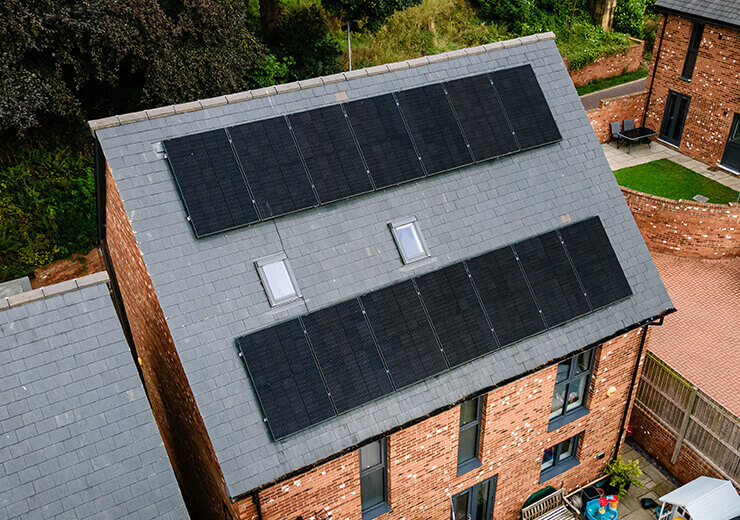
The July split matters. The market is not growing only through large solar farms: households and businesses are installing systems on existing buildings at scale. The Warm Homes Plan states that the UK has more than 1.6 million domestic solar installations and describes rooftop solar as a contributor to the 2030 ambition.
For homeowners considering domestic solar panels, this means the technology is mainstream—but a larger market also creates wider variation in sales models, design quality and aftercare. Volume should not replace engineering.
The Solar Roadmap: More Than a Capacity Target
The UK Solar Roadmap was published in June 2025 and sets out more than 70 actions. These cover grid connections, supply-chain resilience, skills, planning, rooftop deployment and community considerations. The Roadmap also estimates that solar could support up to around 35,000 direct and indirect jobs in Great Britain by 2030.
What 45–47 GW Means for Customers
A national capacity ambition does not tell an individual household what system to buy. It signals continued build-out of the sector and the supporting infrastructure around it. For a customer, the relevant questions remain roof suitability, realistic annual generation, network connection, equipment support and whether the installer will still be able to service the system later.
Commercial Solar Has a Different Opportunity Profile
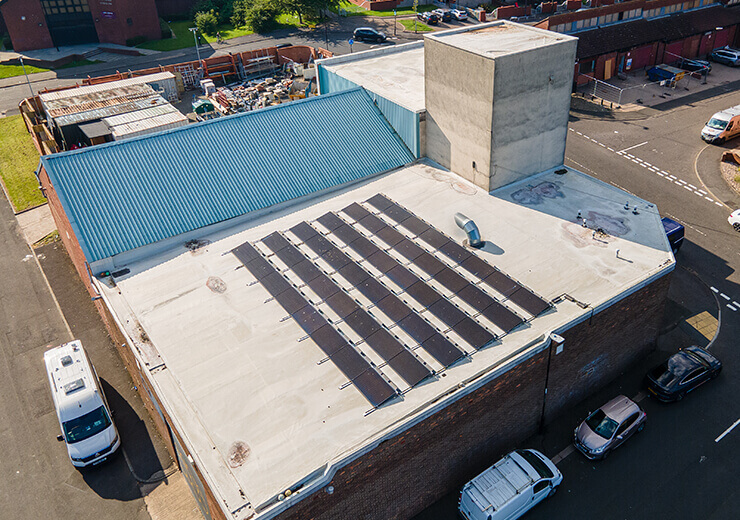
Commercial rooftops can offer large contiguous areas and daytime electricity demand that aligns well with solar generation. The business case, however, depends on half-hourly load, tariff structure, roof tenure/condition, export constraints and the organisation’s capital criteria.
Our commercial solar work therefore starts with the site’s electrical and operational profile rather than multiplying panel count by a generic saving figure.
Battery Storage Is Becoming Part of the System Conversation
As solar penetration grows, customers increasingly ask how to retain more on-site energy, use time-of-use tariffs and manage peak demand. Batteries can help, but their value is highly profile-dependent. The strongest design treats solar battery storage as an energy-management tool rather than an automatic add-on.
Grid Connection Is Becoming More Important, Not Less
More distributed generation means more attention to network capacity, export, inverter settings and connection procedures. A larger array is not useful if the connection strategy has not been considered. The market’s growth therefore increases the value of installers who understand network rules and can design the generation and storage architecture together.
Quality Is the Main Opportunity for Established Installers
A fast-growing market attracts new entrants, sales-led models and rapidly changing product ranges. That competition can be positive, but customers need a way to distinguish an engineered system from a commodity sale.
What We Think Matters More as the Market Expands
- credible site-specific performance estimation;
- roof and structural assessment;
- electrical design and network compliance;
- equipment selected for the actual roof and load, not a stock-clearing package;
- documented warranties and aftercare;
- monitoring that lets faults be identified;
- a business that retains system records and can support the customer long-term.
What Changed Since This Article Was First Published
| Then: October 2024 | Now: September 2026 |
|---|---|
| 2025 market growth was still a forward-looking question. | We have official 2026 deployment data showing record installation activity. |
| Policy direction toward 2030 was less developed. | Clean Power 2030 and the Solar Roadmap set a 45–47 GW ambition and detailed actions. |
| Rooftop growth was discussed as an opportunity. | Government data now shows rooftop systems made up more than seven in ten July installations. |
| Skills demand was a broad industry issue. | The Roadmap explicitly estimates up to around 35,000 solar jobs by 2030. |
What We Expect Customers to Ask Next
As the market matures, the questions should become more sophisticated. Instead of “how many panels can I fit?”, customers should ask how annual yield was calculated, what happens in shade, how the inverter is sized, what the DNO position is, what the warranty chain looks like and how the system will be monitored and serviced.
Our View: Growth Is Positive, but Quality Decides the Customer Outcome
The 2026 data shows a market with strong momentum and a clear national role. That does not mean every installation will have the same performance or customer experience. The opportunity is to combine a growing technology market with stronger design, transparent evidence and long-term support.
The North East Is Part of the Growth, Not Outside It
The 27 August 2026 government release says installations in the North East increased by 11% over the previous 12 months. That is useful regional context for us because it shows deployment growth is not confined to southern England or the largest urban markets.
We would still avoid turning a regional growth percentage into a sales forecast. Installation counts can move with policy, household economics, housing stock and reporting periods. The better conclusion is that the North East has an active and expanding installed base that will also need servicing, inverter replacement, battery retrofits and roof-work coordination over time.
Market Growth Creates a Future Service Market
Every new installation becomes a long-life electrical asset. In the years ahead, the sector will need more than installation crews: it will need technicians who can diagnose communications faults, replace inverters, investigate insulation issues, remove and reinstate arrays for roof work, and support warranty claims.
That service requirement is one reason installer continuity matters. Rapid deployment without adequate record keeping and aftercare simply pushes problems into the future.
Supply-Chain Resilience Is Now a Policy Issue
The Solar Roadmap explicitly includes supply-chain resilience and sustainability among its actions. For installers, that has practical consequences: product availability can change, manufacturers can update model ranges, and substitutions need technical control.
Fast Market Growth Is Not a Reason to Accept Uncontrolled Product Swaps
If the quoted panel or inverter changes between sale and installation, the replacement should be checked for dimensions, current, voltage, warranty, mounting and system performance. “Equivalent wattage” is not enough.
Skills Growth Has to Include Quality, Not Just Headcount
The Roadmap’s estimate of up to 35,000 direct and indirect jobs by 2030 is an opportunity, but the industry also needs consistent technical competence. The value of training is not simply faster installation; it is better surveying, design, fault diagnosis, commissioning and long-term support.
What Market Statistics Cannot Tell You
| Statistic | Useful for | Not enough to decide |
|---|---|---|
| National installation count | Showing deployment momentum | Whether your roof is suitable |
| 45–47 GW ambition | Understanding policy direction | Your correct array size |
| Rooftop share | Showing role of homes/buildings | Your payback or battery size |
| Jobs estimate | Showing sector scale and skills demand | Which installer is competent |
Planning Solar While the UK Market Is Expanding?
We can design the system around your property or business load and explain the technical assumptions behind the proposal.