
Should I Get Solar Panels?
Author: Steve Fairless
Originally Published: 27th January 2024 · Updated: 2nd September 2026
For many UK homes, solar panels are a strong long-term investment, but we do not think every roof or every household should be sold the same system. Solar makes the most sense when the roof can support a useful array, the expected generation is realistic, the household can use or export that electricity effectively and the installation cost is proportionate to the benefit.
At Sustainable Energy Engineering, our answer to "should I get solar panels?" starts with the property rather than the sales pitch. We assess usable roof area, orientation, shading, structural condition, annual electricity demand, planned EV or heat-pump use, battery strategy, tariffs and the network connection before deciding what we would install ourselves.
The UK market is not standing still. Government figures published on 27 August 2026 reported nearly 172,000 solar installations added since the start of 2026, with rooftop solar accounting for more than seven in ten installations during July. High adoption does not prove solar is right for a particular house, but it shows the technology is now a mainstream building-energy decision rather than a niche experiment.
Updated: 2nd September 2026.
Should You Get Solar Panels? The Short Answer
- Yes, if the roof and energy profile are suitable. A good system should be designed around the property, not a standard package.
- Do not judge solar only by roof direction. South is ideal for annual yield, but east and west can still be very useful and may align well with morning or evening demand.
- Use realistic financial assumptions. Payback depends on installation cost, generation, self-consumption, export rate and electricity prices.
- Think about future electricity use. An EV, heat pump or home-working pattern can change the best array and battery size.
- Battery storage is optional, not compulsory. It can increase self-consumption and tariff flexibility, but it adds cost and should earn its place in the design.
Start With the Roof: Can It Produce Enough Useful Energy?
Energy Saving Trust's current guidance uses an average domestic system of around 4.5 kWp, typically covering about 20 to 30 m² of roof. That is a useful national reference, not a target we apply to every property. Some homes have room for less; others can sensibly support much more.
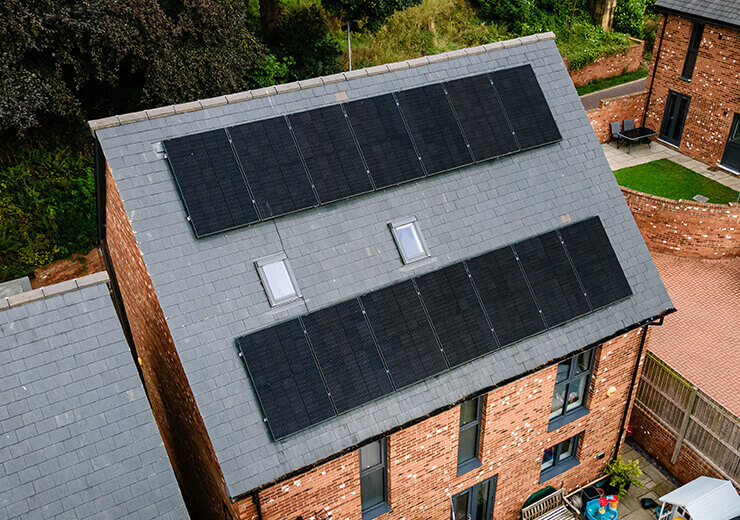
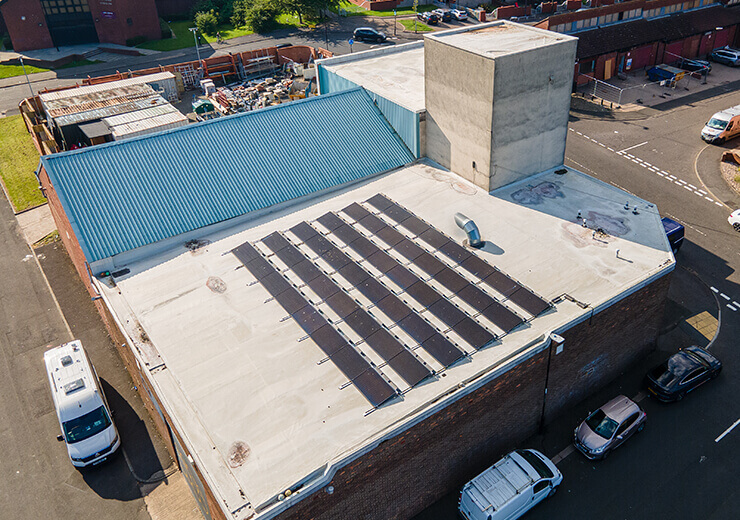
We map the usable roof rather than the total roof. Chimneys, dormers, rooflights, hips, valleys, fire-access requirements, shading and safe mounting clearances all reduce the area that can actually carry modules. We also look at roof condition and structure because the cheapest time to resolve a known roofing issue is before the array is installed.
For homeowners considering solar PV for the home, this is why a panel-count estimate from an aerial image is only the beginning.
Orientation Matters, but It Is Not a South-or-Nothing Decision
An unshaded south-facing roof normally offers the strongest annual yield in the UK. Energy Saving Trust notes that east- or west-facing roofs typically produce around 15–20% less annual energy than a directly south-facing equivalent. That reduction does not automatically make them poor investments.
An east roof produces earlier; a west roof produces later. A split east-west array can broaden the daily generation curve and sometimes align more naturally with household demand. We model the actual geometry and local solar resource rather than reject a roof because the compass is not perfect.
Roof Direction: What We Actually Ask
| Question | Why it matters |
|---|---|
| How much annual energy can the roof produce? | Sets the physical generation potential. |
| When during the day will it produce? | Affects direct self-consumption and battery charging. |
| What shading affects each roof face? | Can change layout, string design and annual yield. |
| How many useful modules fit without poor compromises? | Prevents a maximum-panel-count design from becoming a poor engineering design. |
What Does Solar Cost in 2026?
Energy Saving Trust currently gives around £7,600 as a general reference for a typical 4.5 kWp domestic system. Real quotations vary because roof access, scaffolding, electrical work, module specification, inverter choice, roof type and battery integration can materially change the installed cost.
We would not use the £7,600 figure as a quotation. We use it as market context and then price the actual design. A smaller, awkward slate roof can cost more per installed kWp than a larger, straightforward tiled roof. Likewise, a system that needs consumer-unit changes or a complex cable route is not comparable with a simple installation based only on panel wattage.
How Much Could Solar Save You?
Savings come from two different places: electricity used in the property avoids an import at the applicable retail rate, while surplus electricity can be exported for payment under a Smart Export Guarantee tariff. Those two kWh values are not necessarily the same.
Ofgem has published an average electricity unit rate of 26.32p/kWh for Direct Debit customers on the default tariff cap from 1 October to 31 December 2026 across England, Scotland and Wales. Your own tariff can be higher, lower or structured differently, so we prefer to use the actual tariff in a proposal.
Energy Saving Trust's July 2026 examples show typical domestic solar payback periods with export payments of roughly 9 to 12 years across the locations it models. We see that as useful context, not a promise. Payback can be shorter or longer depending on the property and how the electricity is used.
Do Not Buy Solar From a Payback Number Alone
A quote that says "six-year payback" without showing generation, self-consumption, export, tariff and replacement assumptions is not giving you enough information to judge the claim. We would rather show the inputs than hide them behind a headline.
How We Estimate Generation
We use established performance methodology and site-specific modelling rather than multiplying panel wattage by a generic annual factor. The current MCS MIS 3002 solar PV installation standard requires the performance estimate to account for installed capacity, roof orientation, inclination, postcode region and shading. PVGIS provides an independent solar-resource model that can also be used to sense-check location and orientation.
Annual yield is still an estimate. Weather varies from year to year, modules degrade gradually and real consumption changes. The useful question is whether the design assumptions are transparent and reasonable.
Do You Need a Battery?
No. Solar panels can work perfectly well without storage. A battery is most useful when the property exports a meaningful amount of solar and then imports later, or when time-of-use tariffs create a worthwhile opportunity to shift cheap electricity.
If you are considering solar battery storage, we model the battery separately. A battery can increase self-consumption, but it also adds capital cost, conversion losses and an additional component with its own life and warranty. It should not be treated as free extra value.
What If You Plan to Buy an EV or Heat Pump?
Tell us before the solar system is designed. An EV can add several thousand kWh of annual electricity demand depending on mileage, while a heat pump changes the seasonal load profile and can increase winter electricity use when solar generation is lower.
Future demand can justify a larger array, different inverter capacity, more battery power or a different tariff strategy. It can also affect how we plan cable routes and electrical capacity. Designing only for last year's electricity bill can create an unnecessarily expensive upgrade later.
Does Solar Work in the North East?
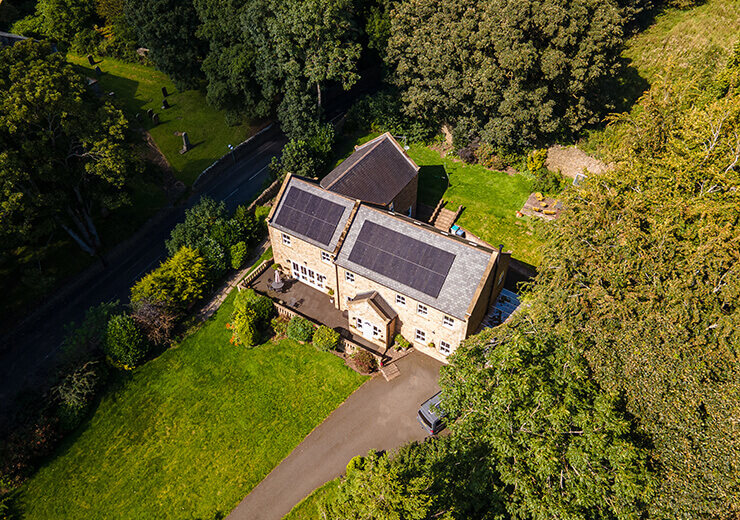
Yes. Solar PV uses daylight, not heat, and systems continue generating in cloudy conditions. The relevant question is the annual solar resource and the geometry of the site. PVGIS provides location-specific modelling across the UK, and our own North East installations give us practical experience of how roof orientation, coastal exposure, shading and local building types affect design.
That local context matters more than repeating a national average. We can show customers our domestic solar case studies so they can compare real installations rather than only brochure diagrams.
When We Would Advise Against Solar
We may advise against a particular design if the usable roof is too heavily shaded, the roof needs major work first, the electrical installation requires disproportionate remedial work, the system would be too small to justify the fixed installation costs, or the financial case only works by assuming unrealistic future energy prices.
Sometimes the right answer is a smaller array. Sometimes it is to repair the roof first. Sometimes it is to design for a future extension. Authority comes from being prepared to say what does not make sense as well as what does.
Our Recommendation: Judge the System, Not the Solar Sales Pitch
Solar panels are mature technology, but the value still comes from design. We want a system that fits the roof, produces a credible amount of energy, matches present and future demand and has a financial model you can understand.
Want to Know Whether Solar Makes Sense for Your Home?
Send us your annual electricity use and property details. We can assess the roof, expected generation, self-consumption and battery options around your actual home.