
How Much Does It Cost to Install Solar Panels in the UK?
Author: Steve Fairless
Originally Published: 29th July 2024 · Updated: 3rd September 2026
Current independent guidance puts a typical domestic solar PV installation at around £7,600 for an average 4.5 kWp system, but an installation quote cannot be priced accurately from panel count alone. Roof access, mounting method, scaffold, electrical work, inverter choice, cable routes, structural condition and network requirements can all change the complete installed cost.
At Sustainable Energy Engineering, we price the finished compliant system rather than presenting a low panel-only figure and adding essential work later. The useful comparison is what is actually included in the design, installation, commissioning, documentation and aftercare.
This guide focuses on the installation cost and scope: what you are paying an installer to assess, design, fit, connect and hand over, and why two apparently similar systems can have different quotations.
For a property-specific price we survey and design through our domestic solar PV service. Where storage is appropriate, we can design solar with battery storage as one coordinated electrical system.
Updated: 3rd September 2026
Solar Installation Cost: The Short Answer
- Energy Saving Trust currently quotes around £7,600 for a typical 4.5 kWp domestic solar system. That is useful context, not a fixed price for every roof.
- Access and roof condition can materially change labour and scaffold costs.
- Electrical work matters. Consumer-unit condition, cable routes, inverter location and network connection can change the scope.
- Qualifying installed solar PV is currently within the temporary zero-rate VAT rules through 31 March 2027.
- The cheapest quote is not automatically the lowest-cost system over its life. Design quality, warranties, monitoring, serviceability and realistic generation matter.
What Does a Solar Installation Price Actually Include?
A professional quote covers much more than the modules on the roof. Before installation, we need to establish whether the roof and electrical system are suitable, design the array and strings, select compatible equipment, plan access and confirm the connection route. During installation, the mechanical and electrical work then has to be completed, tested and documented.
| Part of the job | What it can include |
|---|---|
| Survey and design | Roof measurements, shading, structural checks, electrical assessment, performance estimate and equipment selection. |
| Access | Scaffolding or other safe access, delivery planning and roof protection. |
| Roof installation | Mounting system, roof fixings, flashings where applicable, modules and cable management. |
| Electrical work | DC cabling, inverter, AC cabling, isolators/protection, meter equipment and consumer-unit work where required. |
| Network/compliance | DNO process, testing, commissioning, certification and customer handover. |
| Monitoring and support | App setup, user guidance, warranties and a route for future servicing. |
Why the £7,600 Average Is Only a Starting Point
Energy Saving Trust currently describes the average home solar system as around 4.5 kWp, typically using about 12 panels and 20 to 30 square metres of roof, with an installed cost around £7,600. A different roof or system size can move the price significantly.
We use the figure to give customers national context, but we do not treat it as a tariff. A straightforward modern tiled roof is a very different project from a complex slate roof, multiple roof faces, restricted access or a property needing electrical upgrades.
How System Size Changes Installation Cost
Larger systems use more modules, rail, fixings and cable, but some project costs do not rise in a straight line. The survey, inverter installation, scaffold and commissioning may contain substantial fixed elements. That is why cost per panel is not a reliable way to compare two complete projects.
We size the array around useful roof space, expected generation, electricity use, export limits and future loads rather than chasing the lowest cost per panel.
Roof Type and Access Can Change the Quote
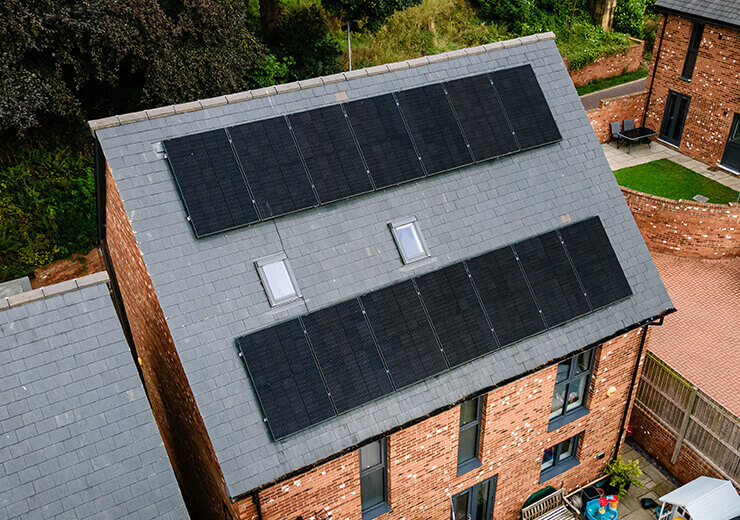
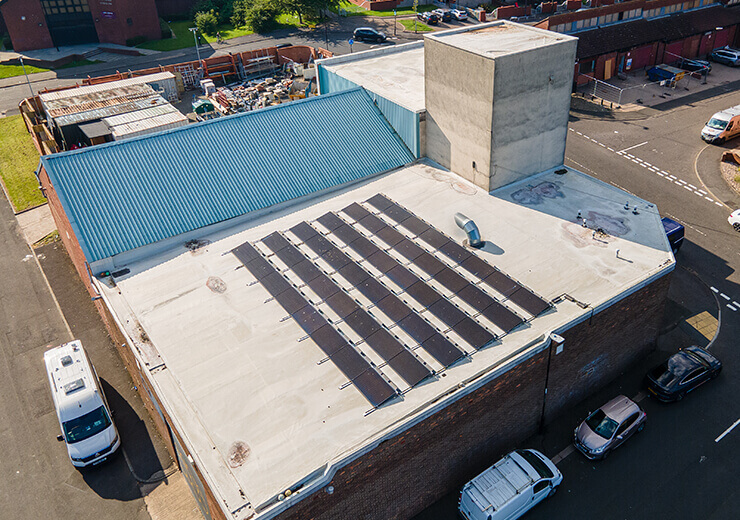
Roof work is one of the largest variables because the mounting method must suit the covering and structure. Tile, slate, metal sheet, flat roofs and roof-integrated systems use different details. Restricted access, conservatories, extensions and height can also change how safe access is provided.
Energy Saving Trust specifically notes roof access, panel-versus-tile choice, building integration and roof renewal as factors affecting cost. If roof work is already planned, coordinating scaffold can sometimes reduce duplicated access costs.
Why We Check the Roof Before Agreeing a Price
Installing a long-life solar array on a roof that needs major repair soon is poor sequencing. We want to identify broken coverings, weak roof areas, water-ingress risks and structural concerns before mounting equipment.
MCS requirements include structural and weather-tightness considerations. If additional investigation or remedial work is required, it should be visible in the scope rather than discovered after panels arrive.
Electrical Work Is Part of the Installation Cost
The inverter needs a suitable location, cable route and electrical connection. Existing protective devices and the consumer unit may need assessment or changes. Battery-ready design, EV charging, three-phase supplies and export-limitation equipment can also affect the specification.
A quote that excludes necessary electrical work can look cheaper initially and still cost more by completion. We prefer to identify those requirements before contract wherever reasonably possible.
Does the DNO Process Add Cost?
Every grid-connected system needs the correct network-connection route. The exact process depends on the aggregate generation capacity, phase arrangement and whether export limitation or other equipment is involved. Some projects are straightforward; larger or more complex projects can require additional design and network work.
We do not treat network approval as an afterthought. A design that cannot connect as intended is not a complete design.
How Battery Storage Changes the Installation Price
Adding a battery increases equipment and installation cost, but installing solar and storage together can allow the electrical architecture, controls and labour to be coordinated. A later retrofit can still be excellent, particularly where the existing solar inverter is worth retaining.
Energy Saving Trust currently places battery storage broadly around £5,000 to £8,000 on its solar guidance, while its battery-specific guide shows a wider market range. Capacity, power, backup capability and system architecture explain much of that spread.
What Is the VAT Position in September 2026?
HMRC currently applies a temporary zero rate to qualifying installations of specified energy-saving materials in the relevant residential and charitable contexts, including solar panels and associated essential equipment. The present temporary period runs through 31 March 2027, after which current legislation provides for a reduced rate rather than the temporary zero rate.
VAT treatment depends on the exact supply and circumstances. A retail purchase of equipment without qualifying installation is not automatically treated the same way as an installed energy-saving measure.
Why Two Solar Quotes Can Differ by Thousands of Pounds
| Difference | Why it matters |
|---|---|
| Panel and inverter specification | Power, warranty, electrical limits, monitoring and manufacturer support differ. |
| Mounting and roof method | Correct roof-specific fixings and weathering details affect labour and materials. |
| Scaffold/access | A simple front elevation differs from multi-elevation or restricted access. |
| Battery/backup scope | Storage capacity and backup hardware can materially alter cost. |
| Electrical remedials | Consumer-unit or cable-route work may be included by one installer and excluded by another. |
| Aftercare | Monitoring setup, commissioning quality and future service support have real value. |
What We Think a Good Quote Should Show
- the exact module, inverter and battery models where applicable;
- installed solar capacity in kWp and expected annual generation;
- mounting system and roof-specific scope;
- scaffolding or access provision;
- electrical protection, cable route and meter work;
- network-connection responsibilities;
- warranties, workmanship cover, monitoring and handover documentation;
- any exclusions that could become additional cost.
Our Recommendation on Comparing Installation Prices
Start with scope, not the total at the bottom of the page. If one quote is cheaper, identify exactly what is different. It may be a genuine efficiency or equipment choice, or it may be missing access, electrical work, battery functionality or aftercare that another installer has included.
We want the customer to understand what we are installing, why it is designed that way and what the system is expected to do. That makes the price far easier to judge.
Want an Installed Solar Price for Your Property?
Send us your annual electricity use and property details. We can design the array, assess the installation scope and provide a quotation based on the actual roof and electrical system.
Request a tailored quote from Sustainable Energy Engineering.