
Do Solar Panels Require Maintenance?
Author: Steve Fairless
Originally Published: 11th January 2024 · Updated: 29th August 2026
Solar panels are low-maintenance, but they are not maintenance-free. For most UK homeowners, maintenance is mainly about monitoring generation, keeping an eye on the system from a safe position, managing vegetation and cleaning the modules only when dirt genuinely warrants it. Electrical testing and roof-level inspection are professional tasks.
At Sustainable Energy Engineering, we prefer a condition-based maintenance plan rather than telling every customer to buy the same annual package. The roof, tilt, trees, birds, local dust, equipment age, monitoring and warranty requirements all influence what is sensible.
Updated: 29th August 2026 using current Energy Saving Trust, MCS, HSE and IEA PVPS guidance.
What Most Homeowners Actually Need to Do
- Check monitoring regularly enough to notice a fault or unusual drop.
- Look at the array from ground level for obvious damage or heavy soiling.
- Keep trees and vegetation from creating new shade where practical.
- Clean only when condition and access justify it.
- Keep handover, warranty and commissioning documents.
- Call a competent engineer for electrical faults, damaged equipment or unsafe access.
How Much Maintenance Do Solar Panels Need?
Modern PV modules have no moving parts and generally need little routine intervention. Energy Saving Trust's current guidance says rainfall removes much of the dirt on many UK rooftop systems, with occasional cleaning needed where dust, pollen, leaves, bird droppings or the local environment allow build-up.
Its latest consumer guidance suggests checking panels periodically and treating cleaning as an occasional, condition-led task rather than something every roof automatically needs several times a year.
Cleaning: Necessary Sometimes, Not Automatically
A dirty panel can receive less light, but the right response depends on the type and extent of contamination. Light dust on a well-pitched roof in a rainy area may clear naturally. Persistent bird fouling, lichen, leaves or heavy local dust can justify cleaning sooner.
Energy Saving Trust currently suggests a light clean roughly every 12 to 24 months as a general guide where useful, while also noting that many systems are kept relatively clean by rain and that some environments need more frequent attention.
Avoid Aggressive Cleaning Methods
Do not stand on solar modules and do not treat a high-pressure washer as standard maintenance. Current Energy Saving Trust guidance recommends water and a soft brush or sponge, and says that if safe access is difficult it is better to use a professional.
A Practical Homeowner Maintenance Schedule
| When | What to check | Escalate if... |
|---|---|---|
| Regularly via monitoring | Generation is recording and no new inverter warning is present | Output stops in daylight or a fault repeats |
| Periodically from ground level | Obvious module damage, slipped equipment, heavy soiling or new shade | You see physical damage, loose equipment or major obstruction |
| After severe weather | Visible structural distress or damage from a safe position | Anything looks displaced, cracked or unsafe |
| When dirt is visibly persistent | Whether rainfall is clearing the surface adequately | Cleaning requires unsafe roof access or damaged cabling is visible |
| When vegetation changes | Branches or growth causing new shading | Pruning itself creates an access or electrical risk |
What MCS Says Customers Should Check
The current MCS solar standard separates customer checks from contractor maintenance. Its Appendix F includes visual checks of modules from ground level, a safe visual check of the inverter, confirmation that recorded generation is increasing, a visual check for structural distress — particularly after heavy winter snow — and reduction of vegetation shading where possible.
For privately owned domestic systems, the table shows those customer checks on an advisory one-year frequency. MCS also makes clear that maintenance requirements vary with system size, building use, roof access and other stakeholders.
Monitoring Is Part of Maintenance
One of the easiest ways to protect a solar investment is to notice when it stops behaving normally. Monitoring does not replace electrical testing, but it can flag a problem early.
Rather than comparing today's kWh with a random day last month, compare similar periods and account for weather and season. A persistent step-change, recurring fault code or one channel behaving differently from the rest is more useful diagnostic information than a single low-output day.
Low-Maintenance Does Not Mean Fault-Proof
IEA PVPS reliability research documents real photovoltaic degradation and failure mechanisms. The practical lesson for a homeowner is not to expect failure, but to avoid assuming that a system is healthy forever just because there are no moving parts on the roof.
What Should Be Left to a Professional?
Do not unplug DC connectors, open inverter enclosures, test live circuits or walk across a roof as routine maintenance. Professional work may be appropriate for:
- Electrical insulation or string testing.
- Inverter and fault-log diagnostics.
- Damaged DC connectors, isolators or cabling.
- Water-ingress investigation.
- Loose or damaged mounting equipment.
- Thermal imaging where a fault is suspected.
- Cleaning that requires roof-level access.
Our solar servicing team can handle this technical work when monitoring or visual checks show there is something worth investigating.
Why Roof Access Changes the Risk
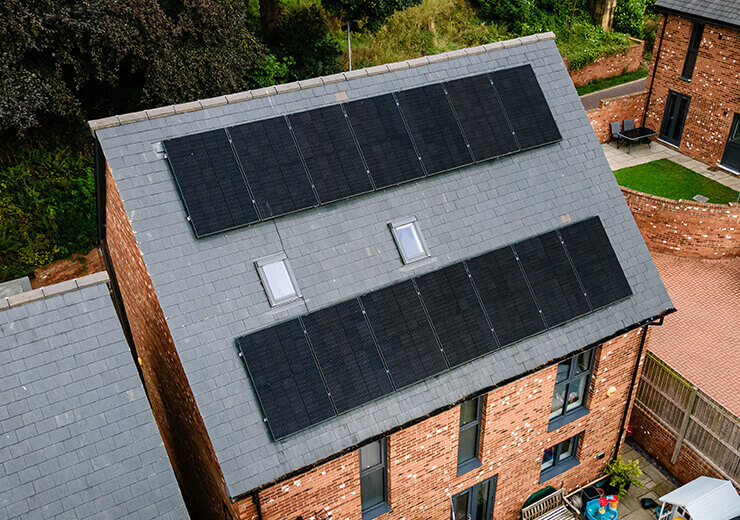
Maintenance advice can sound simple until the array is three storeys above ground on a wet roof. HSE guidance treats roof work as highly dangerous and stresses planning, competence and appropriate precautions. That is why our homeowner advice focuses on what can be done safely from the ground.
If cleaning or close inspection requires roof access, the risk of a fall can outweigh the value of removing a modest amount of surface dirt.
Maintenance After Storms, Snow and Strong Winds
Extreme weather is a sensible trigger for an extra visual check. Look from a safe position for displaced modules, damaged roof coverings, obvious debris, broken glass or anything that appears structurally different.
Do not assume that a dramatic weather event means the system is damaged. Equally, do not ignore a new fault code or visible movement because generation has restarted.
Do Solar Panels Need Annual Cleaning?
No universal rule says every UK rooftop array must be professionally cleaned every year. Current Energy Saving Trust guidance is more nuanced: many rooftop systems are kept relatively clean by rain, and the right interval depends on visible dirt and the local environment.
Ground-mounted arrays, shallow-pitch systems, farms, dusty roads, heavy bird activity and nearby trees can all change the maintenance need.
What About the Inverter?
The inverter is part of the maintenance picture even though it is not on the module surface. Keep its ventilation clear, watch for warning lights or fault codes, and follow the manufacturer instructions. If it is outdoors, obvious signs of water ingress or physical damage deserve investigation.
MCS contractor checks include inverter mounting, ventilation, water ingress and fault logs, showing why panel cleaning alone is not a complete maintenance strategy.
Battery Maintenance Is a Separate Requirement
If your system includes storage, the battery and associated equipment should be maintained according to the manufacturer's instructions. Do not apply panel-cleaning advice to batteries or inverters. Their maintenance is more about alarms, ventilation, temperature, firmware, communications and electrical condition.
Keep Your Documentation
Keep the MCS certificate, commissioning sheets, system schematic, inverter and module details, warranty documents, DNO paperwork and any service reports. MCS requires maintenance information and manufacturer manuals to form part of the handover documentation for certified installations.
That paperwork can save time if a fault appears years later or the property changes hands.
The Best Maintenance Plan Is Proportionate
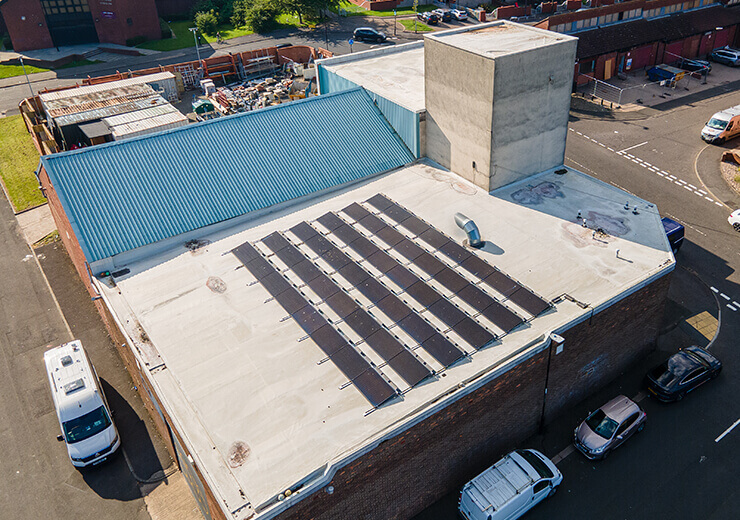
A clean, monitored domestic system with no faults and easy visual access does not need unnecessary intervention. A commercial roof, ageing system, recurring electrical fault or difficult environment may justify a much more active plan. Maintenance should follow condition, risk and evidence.
When to Arrange Professional Help
Arrange an inspection if the system has persistent faults, unexplained performance loss, visible damage, water ingress, damaged cabling or equipment that has moved. For broader home-energy planning, request a solar assessment; for existing systems, use our servicing team.
For larger systems, commercial solar maintenance planning should be more formal because MCS's advisory frequencies are significantly more frequent than for a typical privately owned domestic installation.
A Seasonal Maintenance Routine Without Over-Maintaining the System
Maintenance can be kept simple by using seasonal triggers instead of repeatedly interfering with a healthy system. In spring, check whether winter weather has left obvious debris or whether tree growth is starting to create new shade. Through summer, use monitoring to confirm the system is producing normally during the strongest solar period. In autumn, watch for leaves and vegetation around the array. After severe winter weather, make a safe visual check from ground level.
This approach is deliberately light-touch. It keeps attention on the things most likely to change while avoiding unnecessary roof access or electrical work. If monitoring is stable, there are no fault codes and the array looks clean and secure from a safe position, there may be nothing to do beyond keeping records.
Where the system is older, installed in a harsh environment or serving a commercial building, the maintenance plan should become more formal and may include scheduled professional testing.