
Do Solar Panels Damage Your Roof?
Author: Steve Fairless
Originally Published: 1st September 2026 · Updated: 2nd September 2026
Solar panels should not damage a suitable roof when the system is properly surveyed, structurally designed and installed using compatible mounting equipment. Roof damage is normally associated with poor workmanship, unsuitable roof condition, incorrect fixings, broken coverings left unrepaired, bad waterproofing details or a mounting design that does not account for wind and structural loads.
At Sustainable Energy Engineering, the roof is part of the solar system. The array is only successful if the building remains structurally sound, weather-tight and maintainable after the modules are fitted.
This guide explains the real risks without pretending they do not exist, how current MCS requirements address them, why modern fire-safety research is changing the industry's understanding of rooftop PV and what homeowners should check before and after installation.
Do Solar Panels Ruin Roofs?
No—not when the roof is suitable and the installation is done correctly. Solar mounting systems are specifically designed to transfer panel loads into the building structure while keeping the roof covering functional.
The common preventable problems are:
- cracked tiles or slates that are hidden rather than replaced;
- brackets pressing on brittle roof coverings;
- unsealed or poorly detailed penetrations;
- incorrect wind-loading calculations or too few structural fixings;
- installing over a roof that already leaks or has structural distress;
- cables rubbing on roof surfaces or lying in gutters;
- ignoring roof warranties, fire performance or future maintenance access.
What the Current MCS Standard Says About Protecting the Roof
MCS MIS 3002 Issue 6.0, dated 18 March 2026, gives a clear benchmark: PV systems should not adversely affect the weather-tightness or structural integrity of the building, and the system should be designed and installed so these are maintained for the life of the system.
It also requires the roof structure to be checked by a suitably competent person for the loads imposed by solar PV and says a qualified structural engineer should be consulted where the roof structure is unusual or there is doubt.
The Standard Is Not “Panels Must Stay Attached”
A successful installation has to protect the building underneath. Secure modules are not enough if tiles are cracked, the roof leaks, structural timbers are overloaded or the roof warranty has been compromised without the homeowner being told.
Source: MCS, MIS 3002 Solar PV Systems, Issue 6.0, sections 5.8–5.9, 18 March 2026.
Can Solar Panels Cause Roof Leaks?
A properly detailed on-roof system should not. Many pitched-roof mounting systems pass brackets beneath the roof covering and fix into structural timber without creating an exposed hole through the upper face of every tile. Where penetrations or flashings are required, they need to form part of a tested, compatible detail.
Leaks can occur if:
- a cracked tile is left around a bracket;
- a roof hook holds a tile open and creates a wind-driven rain path;
- underlay is torn during access;
- a cable penetration is improvised;
- existing roof defects are mistaken for solar damage;
- a later roofer moves brackets or cables without restoring the original detail.
Do Installers Drill Holes in the Roof?
Structural fixings are required, but “holes in the roof” is too broad a description. On tiled and slated roofs, brackets are commonly anchored to rafters beneath the covering. On other roof types, engineered roof-specific fixings and sealing systems are used.
The key issue is whether the selected mounting system has a defined method for maintaining weather-tightness and whether it is installed exactly as intended.
Can the Weight of Solar Panels Damage the Structure?
It can if a structurally unsuitable roof is loaded without assessment. A well-designed system accounts for the module, rail and mounting weight plus environmental actions such as wind uplift and snow. The load path has to be understood from the module through the mounting hardware into the roof structure.
Roof condition also matters. A structural capacity that might be acceptable on sound rafters can be unacceptable where timbers have rot, excessive notching, previous alteration or visible distress.
Wind Uplift Can Be More Important Than the Panel Weight
Homeowners often focus on the downward weight of the modules. In exposed conditions, suction created by wind can be a critical design action. Array position, roof height, pitch, building shape and local exposure affect the force each bracket has to resist.
This is why “one hook every X metres” without a wind calculation is not a sufficient design rule. The correct number and position of fixings are project-specific.
Can Solar Panels Crack Roof Tiles or Slates?
They can if brackets are badly positioned or the covering is walked on carelessly. A common technical principle is to prevent concentrated mounting loads bearing on brittle tiles or slates unless a product is specifically designed and certified for that load path.
Good roof work includes identifying spare/replacement coverings before installation, using access methods that minimise breakage and replacing damaged units rather than hiding them under the array.
What About Fire Risk on the Roof?
Solar PV introduces electrical equipment and changes the geometry above the roof surface, so fire performance must be considered as part of design. This does not mean rooftop solar is inherently unsafe; it means the roof and PV system need to be assessed together.
In February 2026, the Building Safety Regulator published updated research reviewing rooftop PV fire behaviour. The literature review found that in some experimental configurations, the semi-enclosed space between a panel and the roof can alter flame and heat-flow patterns, with experimental studies reporting increases in heat flux of up to 50% in certain scenarios. The report emphasises that results depend on geometry, roof construction and test conditions and that its conclusions are research findings rather than government policy.
Why This Research Matters to Installation Quality
The key lesson is not “solar panels cause 50% more fire.” That would misrepresent the research. The lesson is that panel-to-roof geometry, roof covering, separation, system layout and fire classification can affect how a fire behaves. Current MCS requirements therefore include preserving roof fire performance and using appropriately classified products and details.
Source: Building Safety Regulator / GOV.UK, Fire safety: thermal exposure to roofs from fires involving photovoltaic panels, executive summary updated 13 February 2026. Research prepared by OFR Consultants; findings do not represent government policy.
Can Solar Panels Damage a Roof Warranty?
Potentially. A recent roof may carry a manufacturer or contractor warranty with rules around third-party penetrations or fixings. MCS requires the roof warranty provider to be consulted where an existing covering is under warranty and requires the customer to be notified in writing if the proposed installation may invalidate it.
This should be resolved before work starts, not discovered during a later leak claim.
Can Panels Trap Water or Debris?
Rain normally continues to flow down the roof beneath an on-roof array. Problems arise when installation details interfere with gutters, valleys, drainage paths or create areas where leaves and nesting material collect.
Birds can also nest beneath arrays. Appropriate bird protection can help where required, but it should be fitted without damaging the module frame or blocking necessary ventilation.
Do Solar Panels Protect the Roof Beneath Them?
They shade part of the covering from direct sunlight and some weather exposure, but we would not describe this as a roofing repair or guarantee of longer roof life. The roof still experiences temperature changes, moisture, wind and ageing, and areas around the array remain exposed.
Solar should be installed because the roof is suitable—not because the panels are expected to rescue a failing roof.
What Happens If the Roof Needs Repair After Solar Is Fitted?
Minor repairs around the edges of an array may be possible without removing panels. Repairs beneath rails or modules can require temporary removal. A good layout preserves maintenance space around valleys, chimneys, rooflights and gutters so routine roof work is not made unnecessarily difficult.
If a full reroof becomes necessary, the solar system can be electrically isolated, removed, stored and reinstalled once the roof work is complete.
How to Reduce the Risk of Roof Damage Before Installation
Homeowner Pre-Installation Checklist
- Ask for a roof condition check. Existing leaks and damaged coverings should be identified before the array is fitted.
- Confirm structural assessment. The roof should be checked for the loads imposed by the actual PV design.
- Ask which mounting system is being used. It should be compatible with your roof type and installed to manufacturer requirements.
- Check roof warranties. Get written confirmation where a recent roof warranty could be affected.
- Discuss spare tiles or slates. Matching replacements should be available where the covering is old or unusual.
- Review the array layout. It should respect ridges, edges, valleys, rooflights and future access.
- Keep documentation. Photos, mounting details, electrical certificates and commissioning records are valuable for future maintenance.
What Should You Check After the Installation?
From the ground, look for slipped modules, visibly raised or broken roof coverings, loose cabling and displaced ridge or verge details. In the loft, after significant rain, check for any new water staining around the installation area.
Do not climb onto the roof to inspect it yourself. Roof work has significant fall risks and PV modules can remain electrically live in daylight. If something looks wrong, use a competent installer or roofer.
Maintenance Protects the Roof as Well as the Solar System
MCS includes maintenance items such as visual checks for slipped modules, damage and signs of structural distress. This is useful because roof and array performance are connected. A loose module, damaged cable or shifted covering should be dealt with before it develops into a larger issue.
Our domestic solar PV systems are designed around the building, and long-term serviceability is part of that decision.
Solar Roof Myths vs What Actually Matters
| Claim | More accurate view |
|---|---|
| “Panels always put holes through every tile.” | Mounting details vary. On many tiled/slated roofs, brackets pass beneath the covering and fix into the structure; weathering is maintained around those points. |
| “Solar is too heavy for normal houses.” | Many roofs can carry PV, but suitability must be checked for the actual system, structure and environmental loads. |
| “Panels make roofs leak eventually.” | A correct installation should maintain weather-tightness. Leaks are a defect to diagnose, not an expected stage of solar ownership. |
| “If the panel is secure, the roof fixing is fine.” | The bracket also has to protect tiles/slates, transfer loads correctly and maintain the weather envelope. |
| “Any fire risk is inside the panel.” | Fire behaviour can involve electrical faults, mounting geometry, roof construction and the space beneath the array, so system-level design matters. |
How Can You Tell Whether a Leak Is Solar-Related?
Timing alone is not enough. A leak appearing after installation may be connected to the solar work, but it may also come from a pre-existing chimney, valley, ridge or rooflight defect that becomes visible during the same period.
A proper investigation traces the water path and checks the roof above the staining. Useful evidence includes pre-installation photographs, bracket locations and records of any tiles or flashings replaced during the work.
Water Can Travel Before It Drips
Moisture entering higher on a pitched roof can run along underlay, timber or a cable before appearing inside the loft. The visible stain may therefore be some distance from the actual defect. Diagnosis should follow the roof build-up rather than assuming the nearest panel is responsible.
Why Installation Photographs Are Valuable
The finished modules hide many roof interfaces. A photo record taken after brackets and flashings are complete but before panels cover them can show how the system was fixed and weathered. This can shorten later fault finding and give roofers confidence about what sits beneath the array.
For a homeowner, that documentation is part of the asset. Keep it with electrical certificates, warranties, commissioning data and the array layout.
Can Maintenance Work Accidentally Damage the Solar Roof?
Yes. Later work by satellite installers, chimney contractors, roofers or decorators can disturb cables, move brackets or step on modules and roof coverings. Anyone working near the array should know that PV conductors can remain energised in daylight and that mounting components should not be altered casually.
If roof work requires panels to be removed, coordinate the electrical isolation and refitting with a competent solar contractor.
What MCS Expects Owners to Watch Over Time
The maintenance schedule in MCS MIS 3002 includes visual checks for slipped modules, damage and soiling, and it includes checking for signs of structural distress, particularly after heavy winter snow. This reinforces an important point: a PV system is low-maintenance, not no-maintenance.
Source: MCS MIS 3002 Solar PV Systems, Issue 6.0, Appendix F maintenance schedule, 18 March 2026.
What Good Roof Protection Looks Like in Practice
Before Installation
Known defects repaired, structural capacity checked, roof warranty position understood and a mounting system selected for the actual covering.
During Installation
Safe access, controlled tile/slate lifting, structural fixing, correct flashing, cable management and replacement of any damaged coverings.
After Installation
Commissioning records, photographs, visual checks and a clear route for future roof or solar maintenance.
On-Roof and In-Roof Systems Have Different Roofing Risks
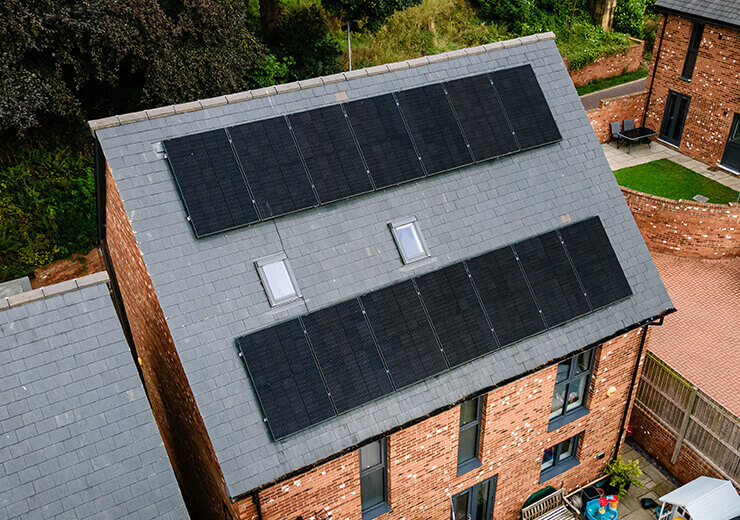
With an on-roof system, the existing tiles or slates remain the primary weather covering and the solar array sits above them. The main interfaces are structural brackets, flashings, cable routes and any penetrations.
With integrated PV, part of the conventional covering is removed and the PV tray or module assembly becomes part of the weatherproof roof. That creates a different responsibility: the integrated system has to drain water, resist wind and maintain fire performance as a roofing component as well as generating electricity.
| System | Main roof-protection priority |
|---|---|
| On-roof PV | Keep the existing covering intact and correctly seated around structural brackets. |
| In-roof PV | Ensure the integrated tray/module system replaces the removed covering with a complete tested weathering detail. |
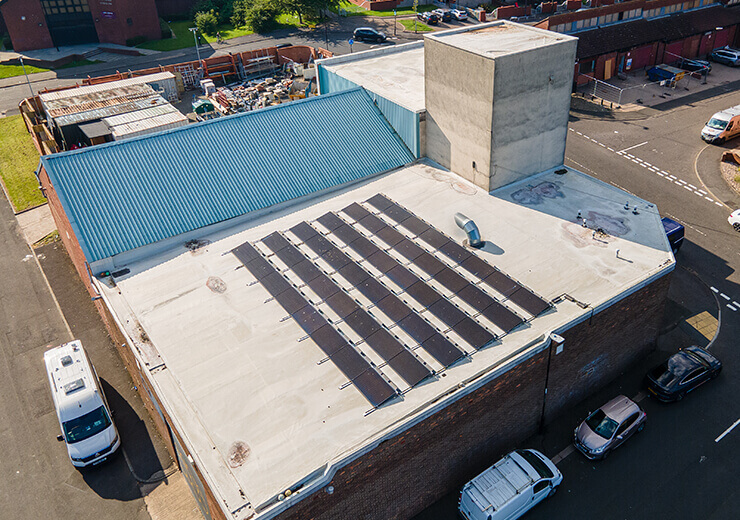
| Flat-roof PV | Protect the membrane, manage ballast or fixings, maintain drainage and verify structural capacity. |
What Should You Do If You Suspect Solar Has Damaged the Roof?
Document the symptom before anything is disturbed. Photograph internal staining, note when it appears and whether it follows wind-driven rain, snow or a particular weather direction. From safe ground level, photograph the external array if anything looks displaced.
Then contact the installer and, where appropriate, an independent roofer. The investigation should identify the actual defect rather than simply blame or clear the solar system without inspection. If modules need to be moved, electrical isolation and refitting should be handled by competent solar personnel.
Do Not Wait for a Small Defect to Become a Large One
A single slipped module, damaged cable clip or cracked tile is usually simpler to correct early than after repeated storms. The same applies to roof movement. If a visual check suggests something has changed, arrange an inspection rather than assuming the array will settle back into place.
Roof Damage Is a Workmanship Risk, Not an Inevitable Solar Outcome
A solar array adds equipment and loading to a roof, so there are genuine technical risks to manage. That is different from saying solar panels inherently damage roofs. Proper surveying, structural design, certified mounting, careful roofing work and sensible maintenance are what separate a long-life installation from an avoidable problem.
If the roof is already failing, repair it first. If the roof is sound, design around it. If the mounting detail cannot preserve weather-tightness and structure, choose a different detail rather than accepting damage as normal.
How We Apply the Roof Rules When We Lay Out a Real Array
We do not push panels towards a roof edge simply to gain one extra module. MIS 3002 uses a 400 mm normal roof-edge clearance for domestic pitched-roof arrays unless the design uses specific measures for the higher-load edge zone. We use that as a starting point alongside the actual wind exposure, roof covering, fixing positions, structural condition, drainage details and future access needs.
If the robust layout means one fewer panel, we would rather explain that trade-off than force a marginal roof detail. The purpose of the survey is not to prove how many modules can physically fit; it is to design a PV system that the roof can support and remain weather-tight around for the long term.
Our roof-first approach: the MCS requirements, Building Regulations structure guidance and current fire research all reinforce the same principle — the array and the building have to be assessed as one system.
Want a Solar Design That Starts With the Roof?
We size the solar system around your energy use and assess the building surface that has to carry it. That includes roof condition, layout, structure and mounting—not just module wattage.
Request a tailored solar quote with your property and electricity-usage details so we can assess the roof and system together.