
Are Solar Panels Worth It in London?
Author: Steve Fairless
Originally Published: 11th March 2024 · Updated: 28th August 2026
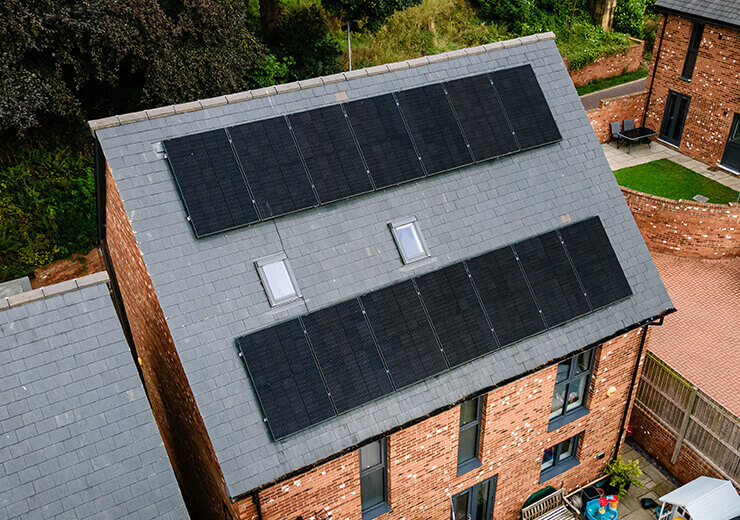
For many suitable London homes, yes — solar panels can still be financially worthwhile in 2026. The strongest cases are properties with a reasonably unshaded roof, a sensible system size, enough daytime or flexible electricity demand, and access to an export tariff. London is not “too cloudy” for solar; the harder urban questions are usually roof space, shading from neighbouring buildings, leasehold/freeholder consent, conservation constraints and the cost of access.
We are Sustainable Energy Engineering, based in the North East of England. We do not present this article as a London installation offer. We maintain it because London is a useful case study in how solar economics change in a dense urban environment, and because homeowners deserve evidence that separates national solar facts from London-specific design constraints.
Updated: 28th August 2026 using current Energy Saving Trust, Ofgem, Greater London Authority, Planning Portal, HMRC and European Commission PVGIS evidence.
Are Solar Panels Worth It in London? The Short Answer
- Energy Saving Trust's current 2026 modelling gives London a nine-year solar payback example across its three occupancy profiles when export payments are included.
- The current Energy Saving Trust benchmark is about £7,600 for a typical 4.5 kWp domestic system, before site-specific extras.
- Urban shading matters more than London's reputation for grey weather. The GLA's Solar Opportunity Map uses LiDAR-derived building data specifically because roof geometry and obstructions matter at property level.
- Electricity remains valuable. Ofgem's July-September 2026 average capped electricity unit rate is 26.11p/kWh for Direct Debit customers on standard variable tariffs.
- Export still has value. Ofgem lists mandatory and voluntary SEG licensees for the 2026/27 SEG year.
- Planning rules changed on 27 August 2026. London homeowners in conservation areas, World Heritage Sites, flats and listed-building settings need to check the current rules carefully.
What Makes London Different from a Typical UK Solar Installation?
Solar physics does not change at the M25. A photovoltaic module responds to solar irradiance, temperature and electrical operating conditions just as it does elsewhere in Great Britain. What changes is the site.
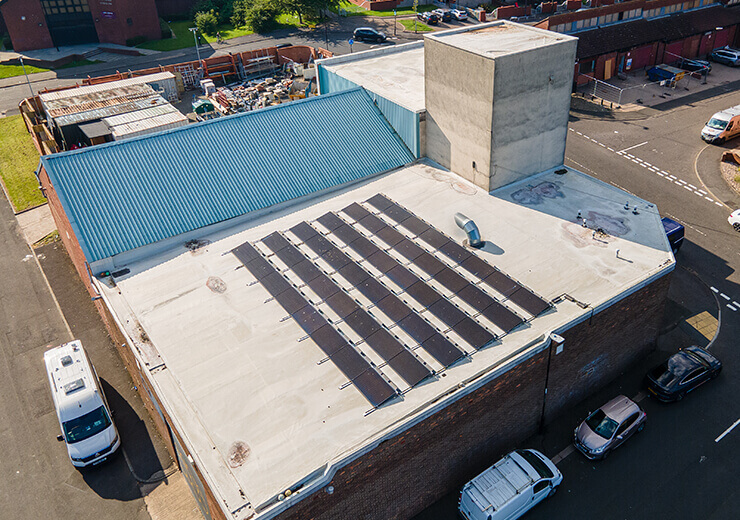
London roofs are often smaller, more fragmented and more heavily influenced by surrounding buildings. Terraces can have chimneys, parapets and party-wall details. Flats add ownership and permission questions. Conservation areas and listed buildings are common in some boroughs. Scaffolding and parking logistics can also make access more expensive than a straightforward suburban roof.
London Advantages
- Strong value for each kWh of grid electricity displaced.
- High population density means large aggregate rooftop potential.
- Cooler operating temperatures than very hot climates can help module efficiency.
- SEG export payments are available across Great Britain.
- Many households can shift appliance use into solar hours.
London Constraints
- Shading from neighbouring buildings and roof features.
- Smaller or irregular roof areas.
- More leasehold and shared-roof situations.
- Conservation-area and heritage considerations.
- Scaffold, parking and access complexity on some streets.
London Has Enough Solar Resource — But It Must Be Modelled Properly
The Greater London Authority's London Solar Opportunity Map exists precisely because solar potential varies from building to building. The map uses LiDAR data to identify opportunity areas and estimate rooftop and ground-level generation potential. Crucially, the GLA also warns that the map is an initial estimate and that a detailed site-specific suitability study should be completed before installation.
That is the right way to think about London solar. A postcode-wide statement such as “London gets enough sun” is too broad for design. We want to know the usable roof area, slope, azimuth, horizon, near shading and likely annual generation for the actual property.
The European Commission's PVGIS tool is useful for location-specific solar radiation and PV-performance modelling. For a quotation, however, the installer still needs to translate that resource data into the real roof geometry and system architecture.
Why Shading Can Change the Answer
A roof can have an excellent geographic solar resource and still be a poor PV roof if a taller building shades it during the highest-value hours. Conversely, a modest roof with clear sky access can outperform a larger roof that is badly obstructed. In London, shade mapping is not an optional extra — it is central to the design.
What Does Current 2026 Payback Evidence Say?
Energy Saving Trust's current solar guidance gives a particularly useful location comparison. Using fuel prices as of July 2026 and including export payments, its model gives London a nine-year payback whether the household is home all day, home half the day or out all day. The same table gives Manchester roughly 10-11 years and Stirling roughly 11-12 years.
That is not a promise that every London array will recover its cost in exactly nine years. It is a national consumer-information model, not a survey of your roof. But it is strong evidence against the idea that solar is inherently uneconomic in the capital.
| Measure | Current reference | How we use it |
|---|---|---|
| Typical domestic system | About 4.5 kWp | Useful starting benchmark, not a recommended size for every roof. |
| Typical installation cost | About £7,600 | National benchmark before difficult access, roof work or optional storage. |
| London payback example | 9 years | Includes export payments; based on July 2026 fuel prices. |
| Panel service life | 25 years or more | Supports long-term economics, while inverters may need replacement sooner. |
| Typical battery cost | About £5,000-£8,000 | Shows why storage should be justified separately rather than assumed. |
Electricity Prices Still Make Self-Generated Power Valuable
Ofgem's current July-September 2026 cap data gives an average electricity unit rate of 26.11p/kWh for a Direct Debit customer on a standard variable tariff across England, Scotland and Wales. Ofgem has also announced an average 26.32p/kWh electricity unit rate from 1 October to 31 December 2026, with the important caveat that electricity VAT is being removed for that period.
The financial value of solar comes from two different routes: electricity used behind the meter avoids buying a unit from the grid, while electricity not used can potentially earn an export payment. Those two values are not necessarily equal.
An Illustrative London Value Calculation
The following is an example only — not a forecast. Assume a London system generates 3,600 kWh in a year, the home uses 45% directly, the avoided import rate is 26.11p/kWh and the export tariff is 12p/kWh.
Change the generation, self-consumption percentage, tariff or export rate and the answer changes. That is why a sales quote that provides only “annual savings” without showing the assumptions is not enough.
SEG Export Is Available — But the Rate Is Not Fixed by Government
The Smart Export Guarantee requires eligible licensed suppliers to offer export tariffs, but suppliers set their own rates and contract terms. Ofgem's current 2026/27 list includes mandatory SEG licensees such as British Gas, E.ON Next, EDF, Octopus, OVO, ScottishPower, So Energy and Utilita, alongside voluntary participants.
A London homeowner should therefore compare export tariffs rather than assuming the first offer is the best. Some tariffs may also have requirements linked to smart meters, import supply or particular technologies.
0% VAT Still Supports the Upfront Economics
HMRC's current guidance states that qualifying energy-saving materials installed in residential accommodation are subject to 0% VAT until 31 March 2027, and solar panels are explicitly included in the list.
This is a genuine current support mechanism. It should not be confused with a cash grant: zero-rated VAT reduces the tax on qualifying installation work, but it does not mean the system itself is free.
What Funding Can a London Household Access?
There is no universal cash grant for every homeowner simply because they live in London. However, the Warm Homes: Local Grant is available in England for qualifying low-income households in privately owned homes, generally where the property has an EPC of D-G. GOV.UK states that eligible improvements can include solar panels.
That distinction matters for accuracy. We would not advertise “free solar in London” as though everyone qualifies. Funding depends on household circumstances, property eligibility, local-authority delivery and available budgets.
Planning Rules Matter More in Some London Streets
England's permitted development rules for domestic solar were updated on 27 August 2026, immediately before this article update. Planning Portal notes a 12-month transitional period to 27 August 2027 and sets out separate limits for houses and blocks of flats.
For houses, current rules include limits on protrusion and additional restrictions for conservation areas and World Heritage Sites. Solar equipment cannot rely on these permitted development rights where the building is within the grounds of a listed building or on a scheduled monument. Leaseholders may also need landlord, freeholder or management-company permission.
London Planning Warning
Do not assume that “solar is permitted development” settles the question. London has a high concentration of conservation areas, flats, leaseholds and heritage assets. Check the current Planning Portal rules and the relevant borough before committing to a design.
Does a Battery Make Solar More Worthwhile in London?
Sometimes. A battery can increase the proportion of solar generation used by the home, particularly where occupants are out during the middle of the day. It can also interact with time-of-use tariffs. But a battery adds thousands of pounds to the project, has finite usable capacity and power, and should be sized against the household's real load.
For readers comparing system architectures, our solar battery storage guidance explains the role of storage, while our domestic solar PV service shows how we approach complete system design in our own North East service area.
Five London Scenarios Where Solar Can Make Strong Sense
- Unshaded owner-occupied house: straightforward access and a clear pitched roof usually make modelling easier.
- Homeworker or daytime household: more generation can be used directly rather than exported.
- EV household: daytime vehicle charging can increase self-consumption where charging patterns allow it.
- Electric-heating or heat-pump household: larger annual electricity demand can increase the value of onsite generation, although seasonal mismatch still matters.
- Battery-ready household: storage may be useful where evening demand is high and the financial assumptions justify the extra capital cost.
When Might London Solar Be a Weak Investment?
A London roof can fail the investment test if it has severe permanent shade, very little usable area, a roof covering that needs major work, unusually expensive access, unresolved freeholder consent or planning constraints that force a poor layout. A small array is not automatically bad, but fixed costs can make very small systems less attractive per installed kWp.
We would rather identify those constraints before installation than sell a system on a generic “London gets enough daylight” message.
Our View: London Solar Is a Site-Design Question, Not a Weather Question
The best current evidence does not support the claim that London is too cloudy for solar. Energy Saving Trust's 2026 payback modelling is comparatively strong for London, the GLA has mapped extensive rooftop opportunity, and national export/VAT support remains relevant.
The deciding variables are much more local: shading, roof geometry, permissions, electricity use, access costs and tariff strategy. If those are favourable, solar can be a credible long-term investment in the capital.
Looking for the Same Engineering Approach in the North East?
We design systems around the property rather than a generic panel count. If you are within our service area, request a tailored solar quotation or learn more about Sustainable Energy Engineering.