
Can You Add More Solar Panels to an Existing System?
Author: Steve Fairless
Published: 28th September 2026
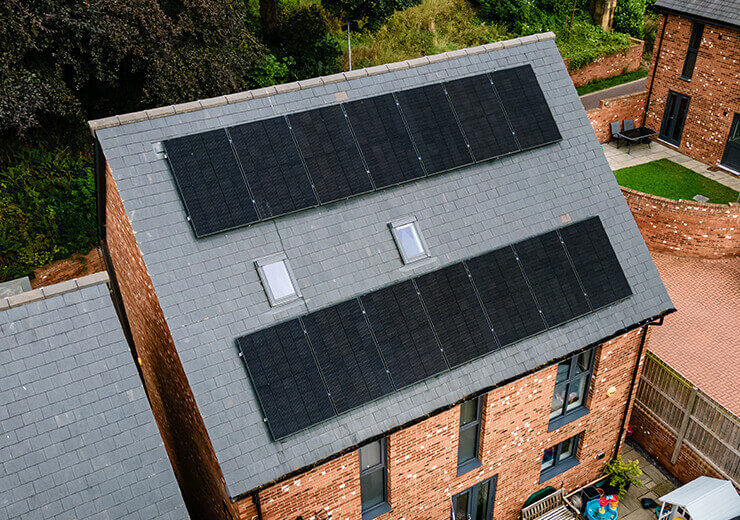
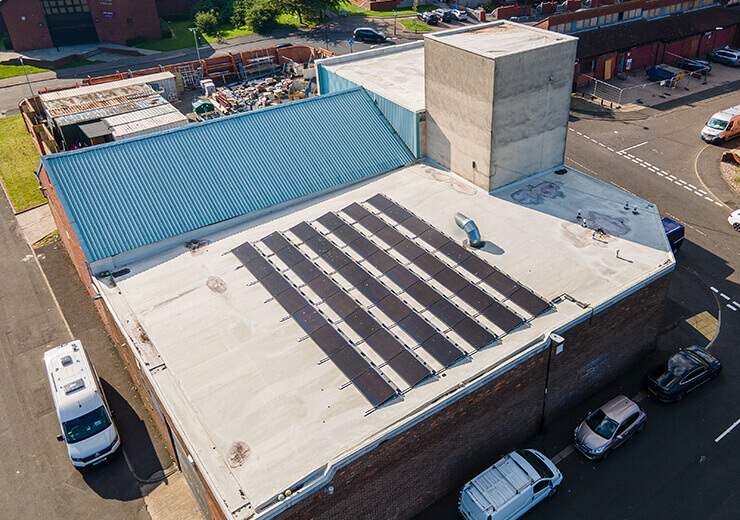
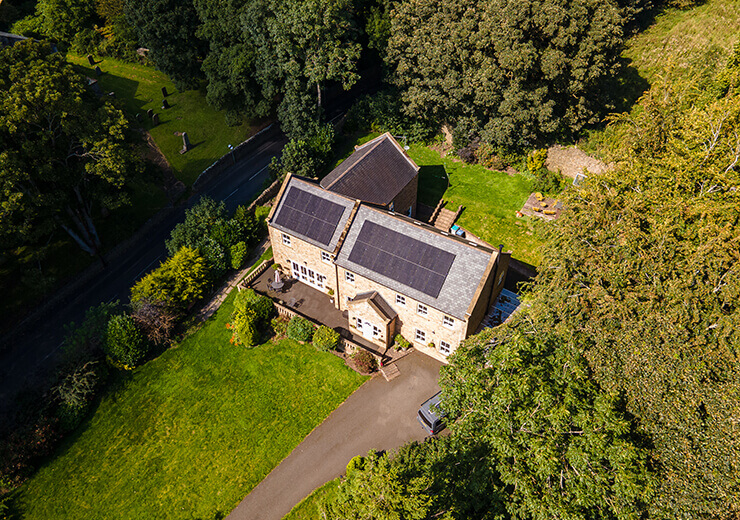
Yes. In many cases, we can add more solar panels to an existing PV system without replacing everything that is already on the roof. The important part is checking whether the existing inverter, MPPT inputs, cabling, roof structure, generation connection and monitoring arrangement can accept the extra capacity safely and usefully.
At Sustainable Energy Engineering, we treat an extension as a redesign of the existing system rather than simply adding whichever panels happen to fit. A successful upgrade has to work electrically, structurally and commercially with the equipment that is already installed.
That means the best solution may be to extend the existing string, add a new string to a spare MPPT, install a second inverter, replace an ageing inverter with a larger hybrid unit, or create a separate solar-and-battery subsystem. The right route depends on the original installation and what you want the extra generation to achieve.
Adding More Solar Panels: The Short Answer
- Check the inverter first. Spare DC input capacity, MPPT voltage/current limits and AC output are more important than simply counting empty roof spaces.
- Do not assume old and new panels should share a string. Electrical mismatch can restrict output and may breach the inverter or module manufacturer's design limits.
- The DNO position can change. An extension can alter the total generation capacity, export capability or connection route, so G98/G99 requirements must be reviewed.
- Roof loading and mounting still need assessment. New modules add wind and dead loads and must be integrated with a compatible mounting system.
- A battery can change the value of an extension. More daytime generation is most useful when the home can consume, store or export it at worthwhile times.
Start With the Existing System, Not the New Panels
Before we specify an extension, we establish what is already installed. That means identifying the module make and model, number of panels, string layout, inverter model, MPPT allocation, DC isolators, AC protection, generation meter, export meter, roof mounting system and any battery or export-limitation equipment.
We also check how the original system performs. A 4 kWp array that regularly reaches its expected output is a different starting point from an older system with shading, failed bypass diodes or an inverter already clipping for long periods. Adding capacity does not fix an unresolved fault.
Information We Want Before Designing an Extension
- original MCS certificate and handover pack where available;
- panel and inverter model numbers;
- existing string diagram or photographs of inverter labels;
- recent monitoring data and annual generation;
- electricity import/export data from the smart meter;
- roof dimensions, orientation and shading changes since the original installation;
- details of any battery, EV charger or heat pump added later; and
- the customer's objective: more self-consumption, battery charging, EV charging, export or future electrification.
The Inverter Decides How Much Extra PV Can Be Added
An inverter has several limits that matter at the same time: maximum DC input power, maximum DC voltage, MPPT operating voltage range, current per MPPT, short-circuit current limit and maximum AC output. It is possible for an inverter to have spare wattage on paper but no practical way to connect another string within its electrical limits.
We also distinguish between DC array size and AC inverter capacity. PV arrays are often designed with more panel capacity than the inverter's headline AC rating because panels rarely operate at laboratory peak conditions for long. Whether additional oversizing is appropriate depends on the inverter manufacturer's permitted DC/AC ratio, the roof orientations and the expected clipping profile.
| Upgrade route | When it can work well | Main checks |
|---|---|---|
| Use a spare MPPT on the existing inverter | The inverter has an unused tracker with suitable voltage/current headroom. | String voltage, current, polarity, DC isolator arrangement, inverter warranty and manufacturer limits. |
| Extend an existing string | Old and new modules can be electrically compatible and the final string stays within inverter limits. | Module current, voltage, temperature-corrected Voc, connector compatibility and mismatch. |
| Add a second inverter | The existing inverter is healthy but has no suitable spare DC input. | DNO connection, AC distribution capacity, export limitation, monitoring and metering. |
| Replace the inverter with a larger hybrid model | The original inverter is ageing or the upgrade is also adding battery storage. | New string design, battery compatibility, DNO requirements, warranties and whether replacing good equipment is economically justified. |
G98, G99 and the DNO: Why an Extension Can Change the Connection Process
Adding PV is not only a roof decision. The network connection must be reviewed because the Distribution Network Operator is interested in the generation equipment that can operate in parallel with the grid.
Energy Networks Association guidance identifies the familiar G98 microgeneration threshold as up to 16 A per phase for type-tested equipment at low voltage. In practical guide terms, that corresponds to 3.68 kW on a single-phase 230 V supply or 11.04 kW across a three-phase 400 V supply. Larger or more complex arrangements normally move into G99 processes.
Why This Matters When You Add Panels
A home that originally had a 3.68 kW inverter may be able to add more DC panel capacity while leaving the AC export-capable inverter rating unchanged, provided the inverter manufacturer permits the design. Adding a second inverter, however, can increase the aggregate generation capacity seen by the network and change the required connection route.
The design must therefore look at all generation equipment at the premises, not only the new panels.
Source: Energy Networks Association, Distributed Generation Connection Guides for Engineering Recommendations G98 and G99. Figures are connection-guide thresholds, not a promise that every installation below them can proceed without further checks.
Can New Panels Be Mixed With Older Panels?
Sometimes, but we do not decide compatibility from wattage alone. In a conventional series string, the modules share the same string current. A replacement or extension module with very different current characteristics can pull the operating point away from the best point for the other modules.
We compare maximum-power current and voltage, open-circuit voltage, short-circuit current, temperature coefficients, connector type, module dimensions and the inverter's MPPT range. Where the old module is discontinued, a new separate string on its own MPPT is often cleaner than mixing generations of panel in one string.
A Higher-Wattage Panel Does Not Automatically Add Its Full Wattage to an Old String
If a new module produces its extra rating by operating at a higher current than the older modules, a series string may not be able to use that extra current. The electrical behaviour of the whole string matters more than the sticker wattage of one panel.
MPPTs Are One of the Best Opportunities in an Extension
Modern inverters commonly have more than one maximum power point tracker. Separate MPPTs allow electrically different roof groups to be controlled independently. That can be useful when the extension is on another orientation, uses a different module generation or experiences a different shading pattern.
For example, an existing south-facing string can remain on one tracker while a new east- or west-facing string uses another, provided both trackers stay within their own operating limits. We would rather use that electrical separation than create a mixed string that performs unpredictably.
Roof Space Is Only Useful If the Mounting Design Works
Extra modules add dead load and, more importantly in many designs, wind uplift loads. The current MCS solar PV installation standard requires mounting components to be compatible and pitched-roof systems to use suitable certified mounting arrangements. The roof structure must also be checked for the imposed loads.
An extension should not be treated as a few independent panels bolted next to the old array. Rail spans, fixing zones, rafter positions, edge zones, tile or slate details and fire/maintenance access all need to be considered as one roof system.
Source note: MCS, MIS 3002 Solar PV Installation Standard, current Issue 6.0; requirements include compatible mounting components, structural assessment and design for site-specific roof conditions.
A Battery Can Make Extra Panels More Valuable
If the original system already exports a large amount of midday generation, adding more panels may increase export rather than reduce imports unless the property has somewhere useful to put that energy. Battery storage, an EV, hot-water diversion or daytime electrical loads can change the economics.
When an extension is being designed around storage, we look at the complete solar PV with battery storage energy flow: how quickly the battery can charge, how much capacity is available by late morning, the inverter's charge power and whether the extra summer generation is likely to be curtailed because the battery is already full.
Worked Example: Extending a 4 kWp Array
Imagine an existing ten-panel array rated at 400 W per module, giving 4.0 kWp of DC capacity. Six new 450 W modules would add 2.7 kWp, taking the combined panel nameplate capacity to 6.7 kWp.
That does not mean the home will suddenly export 6.7 kW. The actual AC output depends on the inverter or inverters, DNO arrangement, orientation, temperature, irradiance and any export limit. If the new modules face west while the original array faces east, their peaks may also occur at different times, which can make a larger DC array sensible without creating a matching increase in the instantaneous AC peak.
Illustrative nameplate capacity before and after extension
Illustrative arithmetic only: 10 × 400 W = 4.0 kWp; 6 × 450 W = 2.7 kWp; combined nameplate = 6.7 kWp. Actual generation and export require site-specific modelling.
Will Adding Panels Affect Smart Export Guarantee Payments?
The Smart Export Guarantee pays eligible small-scale generators for metered exports. Ofgem states that solar PV is an eligible technology and that installations can be eligible up to 5 MW total installed capacity, subject to the scheme and supplier requirements. A typical domestic extension is far below that ceiling, but documentation still matters.
After an alteration, we make sure the revised system information, MCS documentation where applicable, generation capacity and metering arrangements are coherent. Customers should also tell their SEG supplier when required by their tariff terms.
Source note: Ofgem, Smart Export Guarantee guidance for generators. The 5 MW eligibility ceiling is the scheme limit for most eligible technologies, not a domestic design target.
When It Is Better to Replace Rather Than Extend
Sometimes the cheapest-looking extension creates too many compromises. If an inverter is near the end of its life, the existing module layout is poor, roof works are already planned, monitoring is unreliable or the old array uses hardware that is difficult to source, a more comprehensive redesign can produce a cleaner result.
That does not automatically mean replacing the panels. We may retain good modules, reorganise strings, replace the inverter, add a new roof plane or integrate storage. Our solar PV servicing and system assessment work is particularly useful when the condition of an older array needs to be established before money is committed to an extension.
Our Upgrade Checklist Before We Add a Single Panel
- Verify the existing system's electrical and generation performance.
- Confirm panel, inverter and mounting-system model details.
- Measure usable roof area and update shading/orientation assumptions.
- Recalculate every affected string for cold open-circuit voltage and operating current.
- Check spare MPPT capacity and manufacturer-approved DC oversizing.
- Review AC protection, cable capacity and consumer-unit arrangement.
- Review aggregate generation and the applicable DNO process.
- Model export, self-consumption and battery charging rather than generation alone.
- Check mounting compatibility, structural loading and weather-tightness.
- Update drawings, labels, monitoring and handover documentation after commissioning.
When Extending Your Existing Solar System Is Worth It
Adding more panels can be one of the most cost-effective ways to increase solar generation because part of the original installation infrastructure is already in place. It is especially attractive when electricity use has risen because of an EV, heat pump, home working or battery storage.
The key is to extend the system, not just the roof array. We want the new panels to sit in the right electrical group, stay within inverter limits, comply with the network connection, use compatible mounting equipment and deliver energy at times when the property can make use of it.
How We Decide Whether More Panels Can Join the Existing System
We separate PV array size on the DC side from the generation capacity seen on the AC/network side. A property can sometimes accept additional DC module capacity while keeping the same inverter AC rating, provided the inverter manufacturer’s voltage, current and oversizing limits are respected. Adding another inverter is different because it can increase the aggregate generating capacity operating in parallel with the network.
The familiar G98 reference is 16 A per phase — 3.68 kW on a 230 V single-phase supply — but we treat that as a connection threshold, not as a target system size. Before recommending an extension, we record the existing inverter, MPPT ranges, string voltages and currents, spare DC capacity, AC rating, DNO paperwork, metering, roof loading and the reason the customer wants more generation.
Our design principle: we do not add panels until the old and new equipment have been assessed as one system. That prevents a roof-space opportunity becoming an electrical, network or monitoring problem later.
Thinking About Expanding an Existing Solar PV System?
We can assess the current array, inverter, roof space, generation data and DNO position before recommending the cleanest upgrade route.
Request a solar PV extension quote and tell us what is already installed and why you want more generation.